How DMCA Takedowns Work: A Creator's Complete Guide
Learn how DMCA takedowns protect your content from piracy. Understand the process, requirements, and best practices for removing stolen content online.
Overview
The focus is evidence, ownership, notices, and escalation. This topic connects to dmca-takedown, content-protection, copyright-removal, piracy-prevention, so the strongest approach is to separate copyright proof from the URLs that need removal.
Use this as a practical guide for understanding the issue, collecting the right evidence, choosing the correct removal path, and knowing when to escalate the case.
Understanding the DMCA and Your Rights as a Creator
A DMCA-style request works best when it is specific. List the original work, the infringing URL, your ownership statement, and the exact content that should be removed.
Do not combine unrelated problems in one vague message. If a post includes stolen content, impersonation, and private information, keep the evidence organised so each issue can be reviewed through the correct channel.
The DMCA Takedown Process Step by Step
A DMCA-style request works best when it is specific. List the original work, the infringing URL, your ownership statement, and the exact content that should be removed.
Do not combine unrelated problems in one vague message. If a post includes stolen content, impersonation, and private information, keep the evidence organised so each issue can be reviewed through the correct channel.
Essential Elements of a Valid DMCA Notice
A DMCA-style request works best when it is specific. List the original work, the infringing URL, your ownership statement, and the exact content that should be removed.
Do not combine unrelated problems in one vague message. If a post includes stolen content, impersonation, and private information, keep the evidence organised so each issue can be reviewed through the correct channel.
Common Challenges and How to Overcome Them
This section connects Common Challenges and How to Overcome Them to the wider DMCA & Takedowns, Copyright & Legal process. For this topic, the important signals are DMCA, Takedowns, Work, Learn, protect and the practical goal is to move from a visible problem to a documented removal path.
Keep the evidence narrow and useful: exact URLs, screenshots, platform names, dates, account handles, and proof that links the content or identity back to the creator.
Working with Different Types of Platforms
This section connects Working with Different Types of Platforms to the wider DMCA & Takedowns, Copyright & Legal process. For this topic, the important signals are DMCA, Takedowns, Work, Learn, protect and the practical goal is to move from a visible problem to a documented removal path.
Keep the evidence narrow and useful: exact URLs, screenshots, platform names, dates, account handles, and proof that links the content or identity back to the creator.
Monitoring and Prevention Strategies
Leak monitoring should look beyond the first obvious post. Search for file names, stage names, watermarks, usernames, short clips, thumbnails, and repost phrases that pirates commonly reuse.
When repeat uploads appear, keep them grouped by source, platform, and date. Patterns make it easier to decide whether the issue needs a takedown, search cleanup, account report, or stronger ongoing monitoring.
Legal Considerations and Best Practices
The TAKE IT DOWN Act route is especially relevant for non-consensual intimate images and certain synthetic or deepfake abuse. It is not a replacement for every copyright report, but it gives creators another path when the harm involves intimate content exposure.
When using a law or policy-based route, keep the request factual. Include what the content is, where it appears, why it should be removed, and any proof that shows the content was shared without permission.
Measuring Success and Long-term Protection
This section connects Measuring Success and Long-term Protection to the wider DMCA & Takedowns, Copyright & Legal process. For this topic, the important signals are DMCA, Takedowns, Work, Learn, protect and the practical goal is to move from a visible problem to a documented removal path.
Keep the evidence narrow and useful: exact URLs, screenshots, platform names, dates, account handles, and proof that links the content or identity back to the creator.
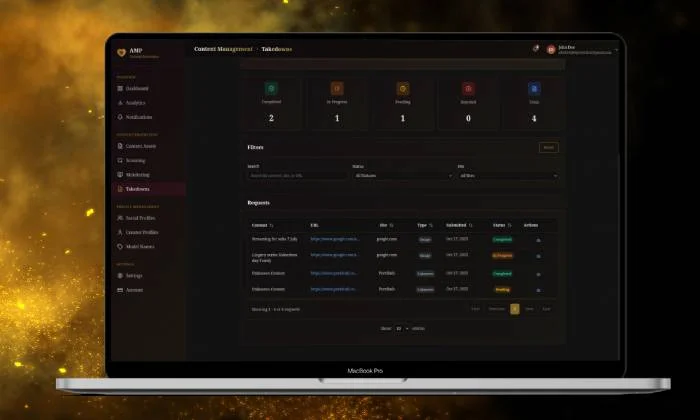
Managing Multiple Takedowns Efficiently
A DMCA-style request works best when it is specific. List the original work, the infringing URL, your ownership statement, and the exact content that should be removed.
Do not combine unrelated problems in one vague message. If a post includes stolen content, impersonation, and private information, keep the evidence organised so each issue can be reviewed through the correct channel.
Understanding Counter-Notification Requirements
A refusal, counter-notice, or incomplete response does not mean the case is finished. It means the next step needs better evidence, a different removal route, or escalation to the platform, host, search engine, or legal support.
Keep every email, ticket number, timestamp, and platform reply. Those records help identify what was rejected and prevent you from resubmitting the same weak request.
How 7Ink can help
7Ink White Knight Protection helps creators organise evidence, prepare takedown requests, monitor for copies, and move from one-off reports to a cleaner protection workflow. If this issue affects your content, send the URLs, screenshots, account handles, and any ownership proof through the member portal or contact form.
Save every URL, screenshot, username, and upload date before reporting the issue. Good evidence makes takedown work faster and cleaner.
Need help with this?
Send the URL, screenshots, and any account details you have. The more exact the evidence is, the faster the issue can be checked.